



















Train and coach your team

I train demand and inventory planning teams, online or on site. Your planners solve real cases, build their own models and simulations, and apply the concepts the same day.

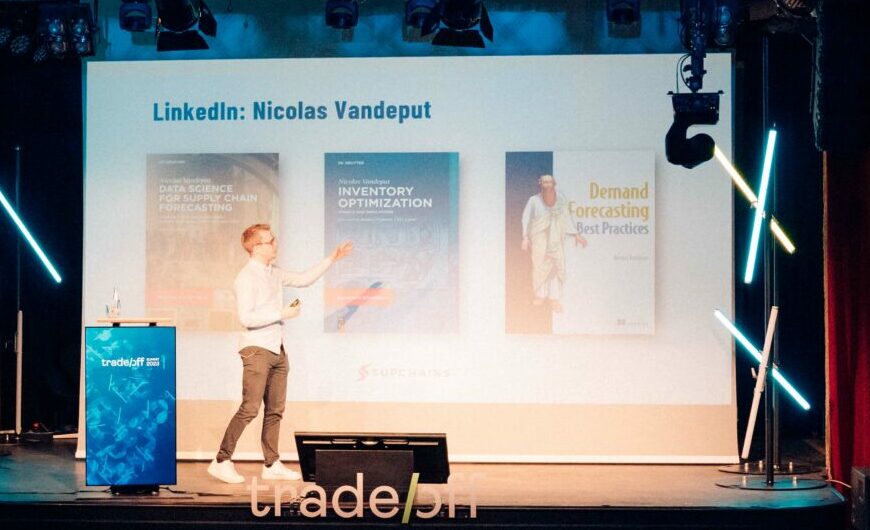
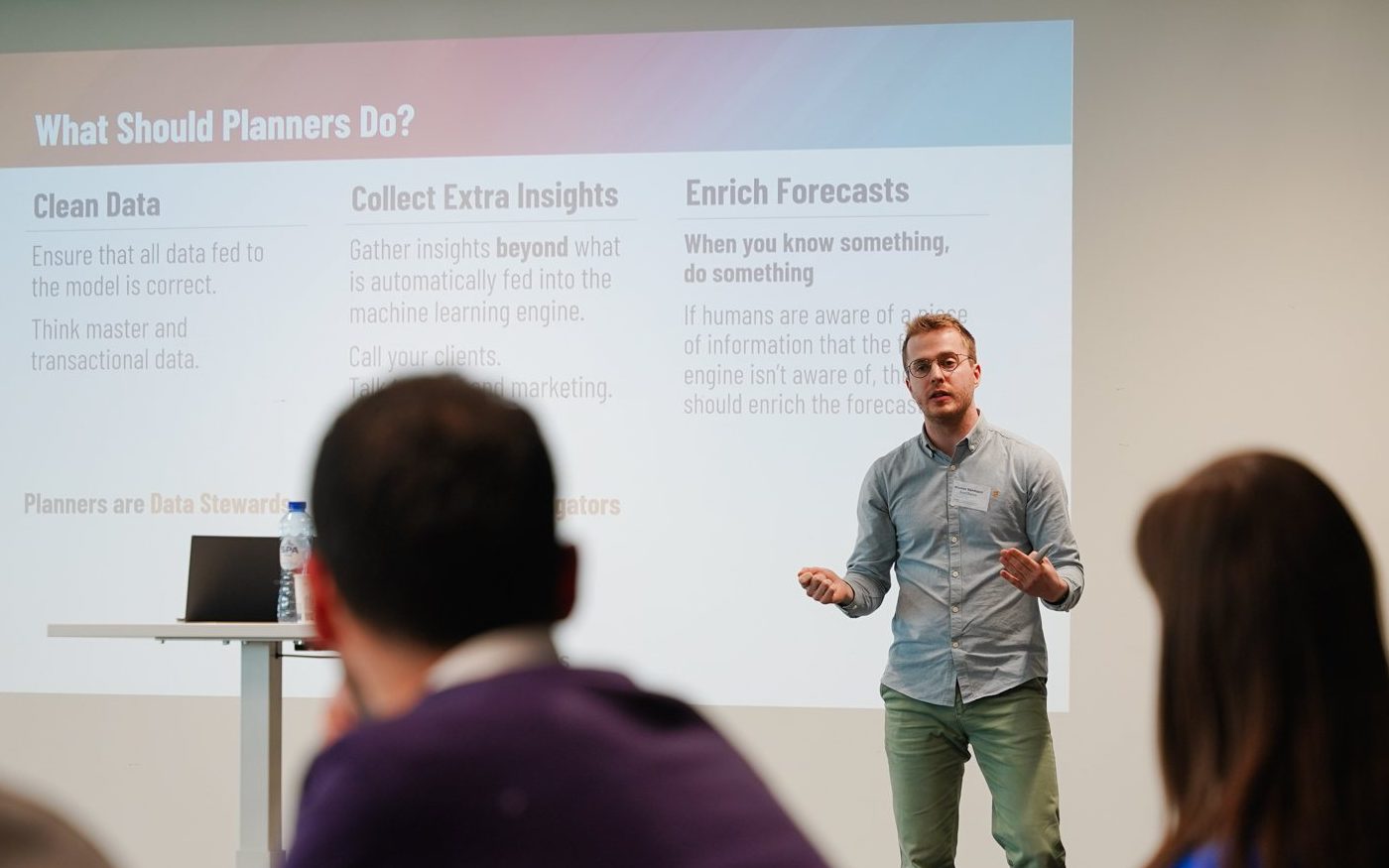
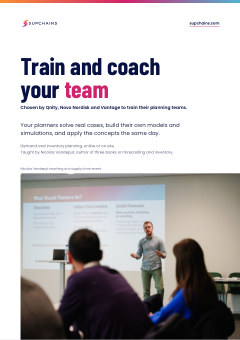
Nicolas Vandeput teaching a room of planners, in front of a slide titled What should planners do?

What changed for our clients

79companies trained or coached since 2017

After reading his excellent and approachable Demand Forecasting Best Practices book and completing the first wave of training, we successfully moved away from legacy forecast accuracy metrics and implemented Forecast Value Added framework across all business units.

Read the full quote

Working with Nicolas Vandeput and the SupChains Team has started to fundamentally change how we approach demand forecasting at Qnity. After reading his excellent and approachable Demand Forecasting Best Practices book and completing the first wave of training, we successfully moved away from legacy forecast accuracy metrics and implemented Forecast Value Added framework across all business units. That change immediately surfaced issues and behaviors we had not previously been able to see and started to genuinely improve decision‑making.

We are now actively applying Nicolas’ framework to make demand more explicit and decision‑ready, have completed an initial ML forecasting proof of concept, and are running a second wave of training while piloting SupChains’ forecast‑as‑a‑service.

Matti VarheenmaaGlobal Supply Chain Manager, Qnity Electronics · electronic materials

With the training as a starting point (…) we have improved our accuracy and bias significantly across countries and brands.

Read the full quote

Demand planning training by SupChains/Nicolas supported our demand planning journey with move to statistical forecasting on focusing what is most important and how we measure what good looks like. Finally we established a common language across our organisation – not only within supply chains but also in our bridging to Finance and commercial. With the training as a starting point and concrete initiatives post the training session we have improved our accuracy and bias significantly across countries and brands.

Simon Holmbom LeitnerHead of S&OP and Demand Management, Novo Nordisk · pharmaceuticals

…with written feedback highlighting his exceptional pedagogical skills, making examples, and his vision easily understandable to everyone.

Read the full quote

We organized an inspirational event at IKEA for global Demand Planners and associated management and stakeholders, focusing on the future of Demand Planning. We invited Nicolas as an external guest speaker, whose presentation was praised for introducing new ideas, confirming existing strategies, and challenging us to improve. He received a rating of 4.33 out of 5 in our survey, with written feedback highlighting his exceptional pedagogical skills, making examples, and his vision easily understandable to everyone.

Eric FridehemBusiness Process Owner Demand Planning, Inter IKEA · home furnishing

Six courses for your team

Over the years, we developed our own way of doing demand and inventory planning. We call it the SupChains Way. Every course teaches it. We recommend that your team starts with the Demand Planning course.

6×2 hoursWhere every team starts

Demand Planning

What demand forecasting should be about, how to measure planning success, and how to achieve it

  1. Demand versus sales: unconstrained demand, and the difference between forecasts, plans, budgets and targets
  2. The right granularity and horizon for your supply decisions
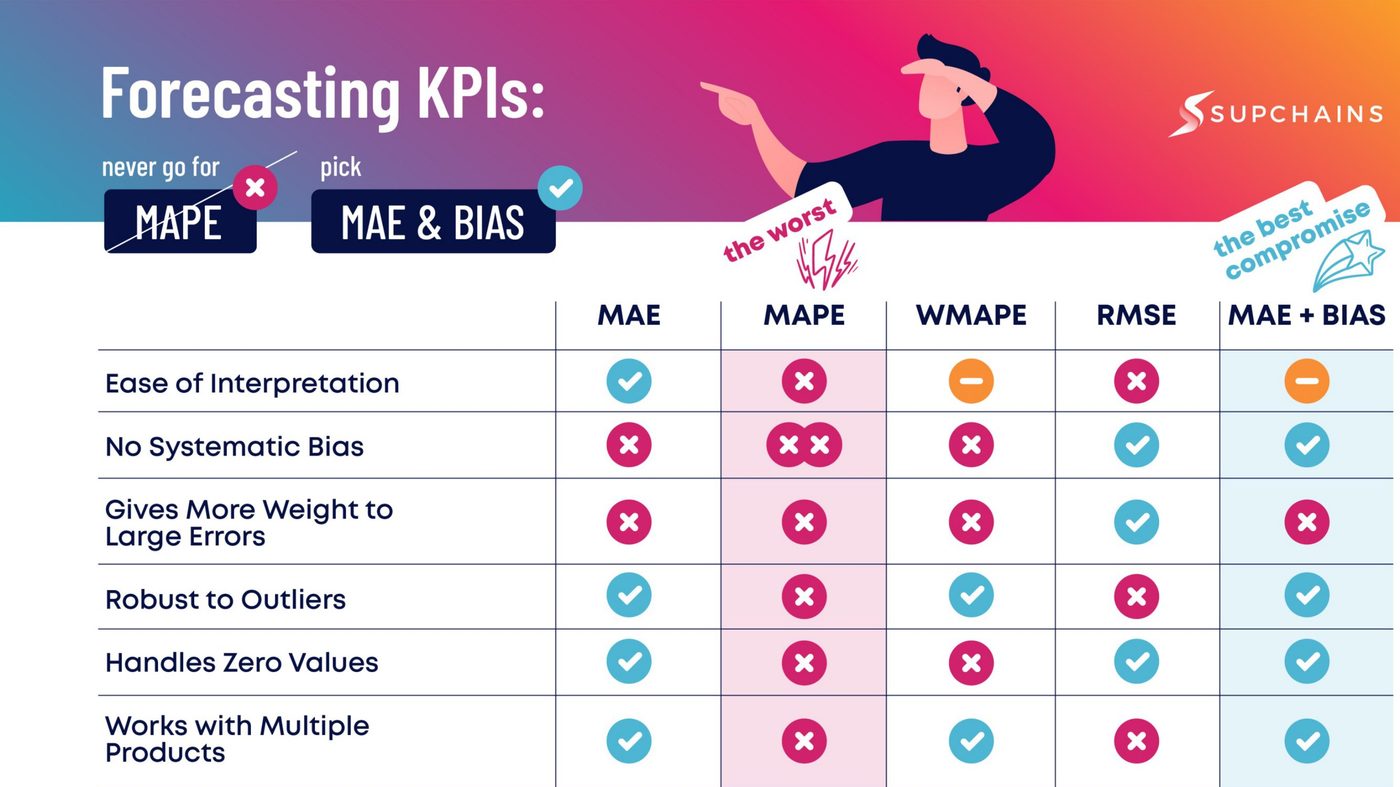
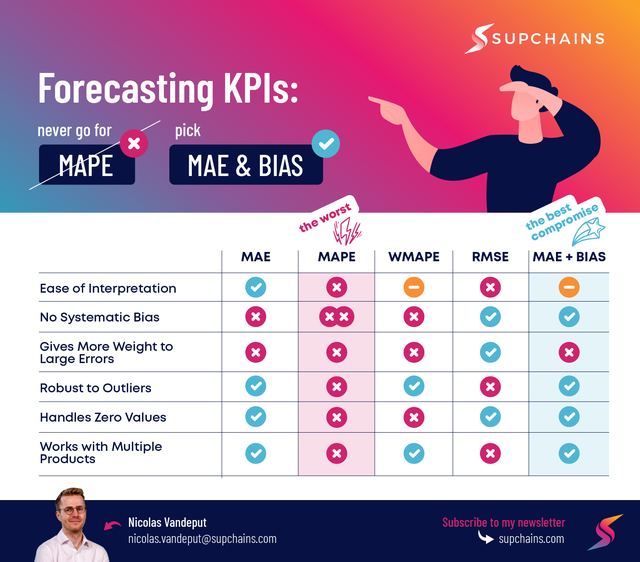
  3. Accuracy and bias, with metrics weighted by value instead of MAPE
  4. Forecast Value Added: what each step of your process adds
  5. Demand drivers, statistical models and machine learning
  6. When planners should enrich the forecast, which products to review first, and how to avoid biases
  7. New products, outliers, and five case studies: data errors, prices, shortages, promotions and Covid
  8. The Beer Game, then your team assesses its own maturity in data, metrics, models and enrichment
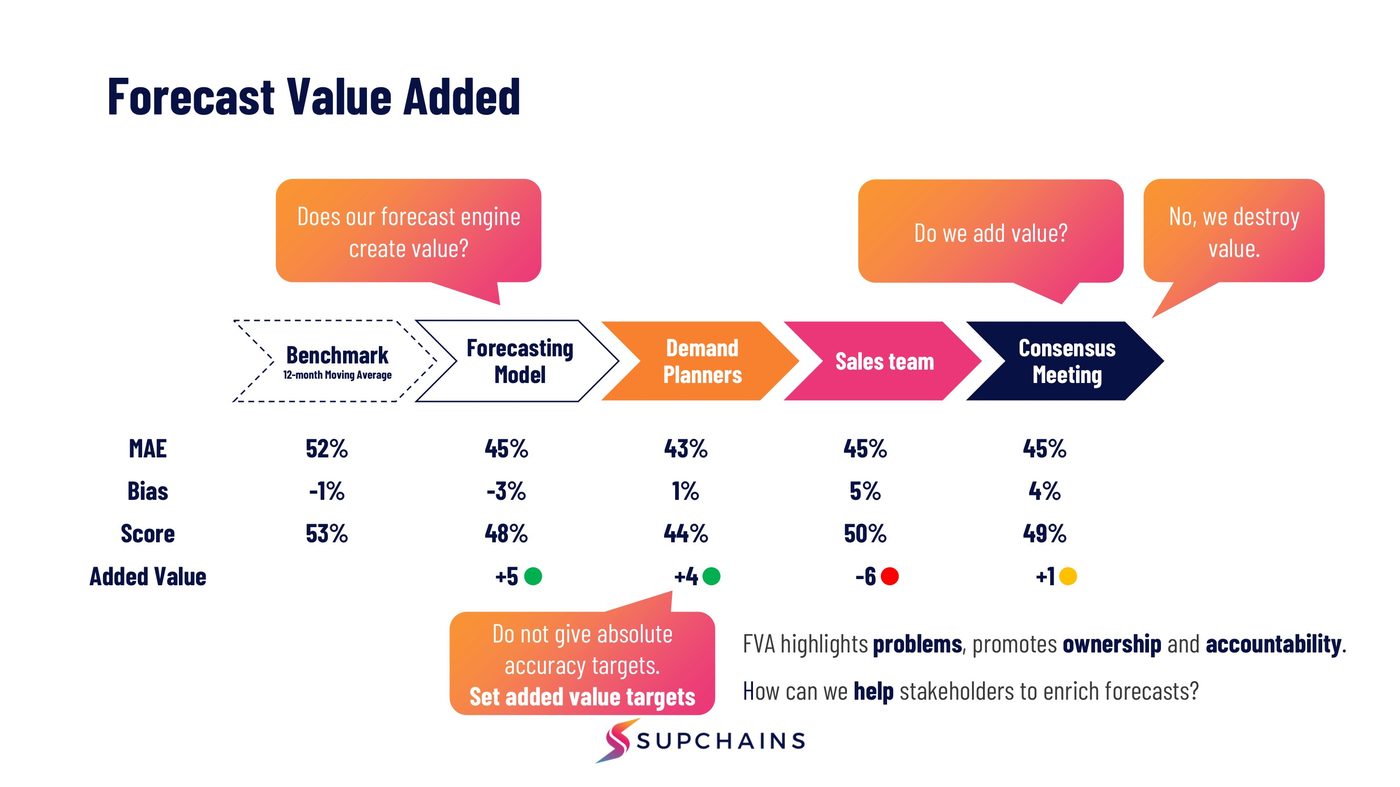
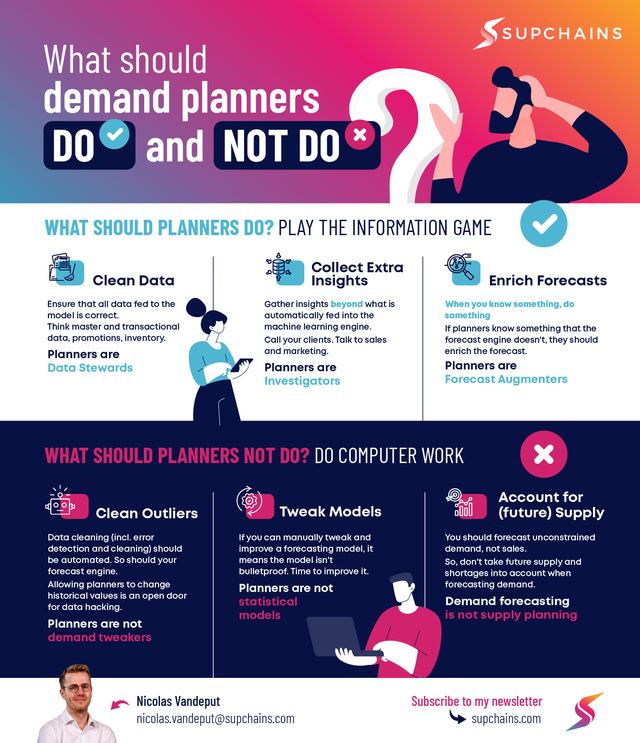
A page of the Demand Planning course: Forecast Value Added from the benchmark to the consensus meetingA page of the Demand Planning course: how to choose your forecasting metrics, never MAPE, pick MAE and bias

Two pages of the course. Forecast Value Added, step by step, and how to choose your forecasting metrics.
4×2 hours

Statistical Forecasting

Build forecasting models in Excel, then measure them against a benchmark

What the course covers
  • Moving averages and exponential smoothing, with trends, damped trends and seasonality
  • Model optimization with Excel Solver, and cross-validation to control overfitting
  • Practice on real monthly car sales

5×2 hours

Supply Planning

Balance inventory levels and run an inventory planning process

What the course covers
  • Four service levels: item and order fill rates, cycle and period service levels
  • Static, hybrid and dynamic policies, which your planners simulate on past demand and forecasts
  • Service-level targets to pilot your policies, and alerts instead of ABC classes

1 day

Supply Chain Strategy and S&OP

How business strategy sets supply chain strategy, and the building blocks of S&OP

What the course covers
  • How S&OP differs from IBP
  • How to align with finance without turning the forecast into a target
  • Our S&OP game: your team plays the directors of a chocolate maker in an executive meeting

Custom

Fresh Connection

A full business game: teams run a supply chain end to end and see what each trade-off costs

What the course covers
  • Sales, purchasing, operations and supply chain bring a juice maker back to a positive return

2 hours

Beer Game

Pilot a supply chain as a team, feel the bullwhip effect, and see what information sharing fixes

What the course covers
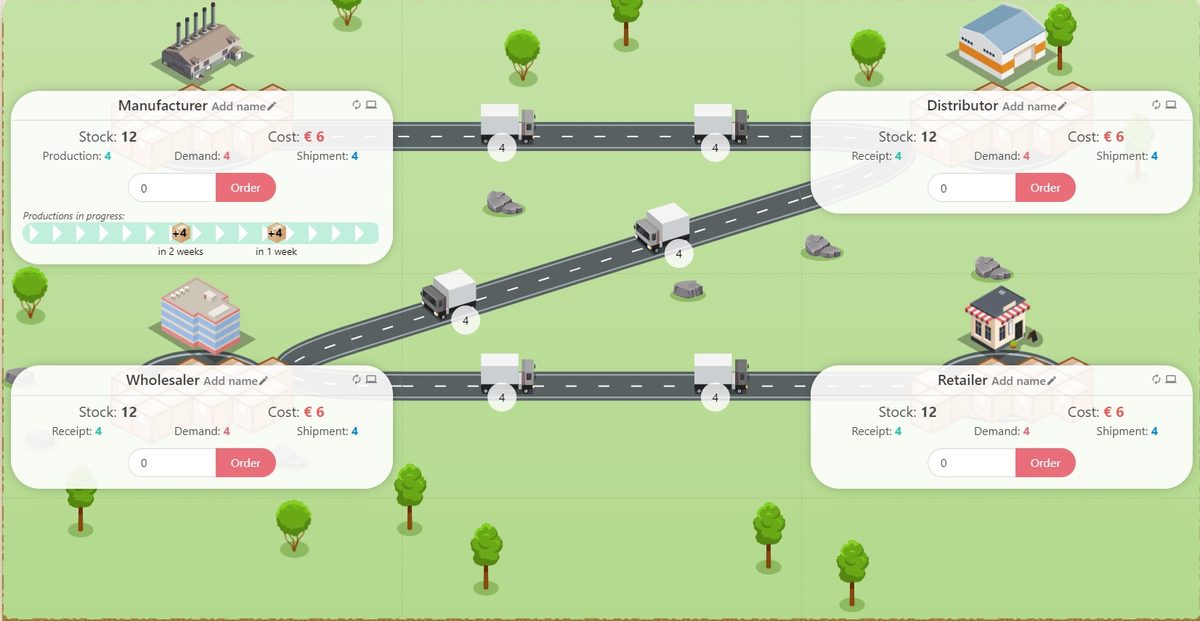
  • Four roles over 20 simulated weeks, played online in two rounds: first in silos, then sharing information
The Beer Game played online: manufacturer, distributor, wholesaler and retailer on one supply chain
The Beer Game, played online. Four roles on one supply chain, each with its own stock, orders and costs.

How a course runs

  1. Online or on site

    Live sessions

    Your whole team takes part. Online sessions last two hours at most. Every participant answers questions live. The Demand Planning course asks more than 50.

  2. Every session

    Hands-on

    Your planners build their own models and simulations in Excel, on real cases.

  3. Beer Game, Fresh Connection

    Games

    Your team pilots a supply chain together and sees what each decision does to stock, service and costs.

  4. After the course

    Coaching

    One-hour sessions help your leaders drive the change and answer your planners’ questions.

Questions clients ask us

Is it online or on site?
Both are possible, in English or French.
Who teaches the courses?
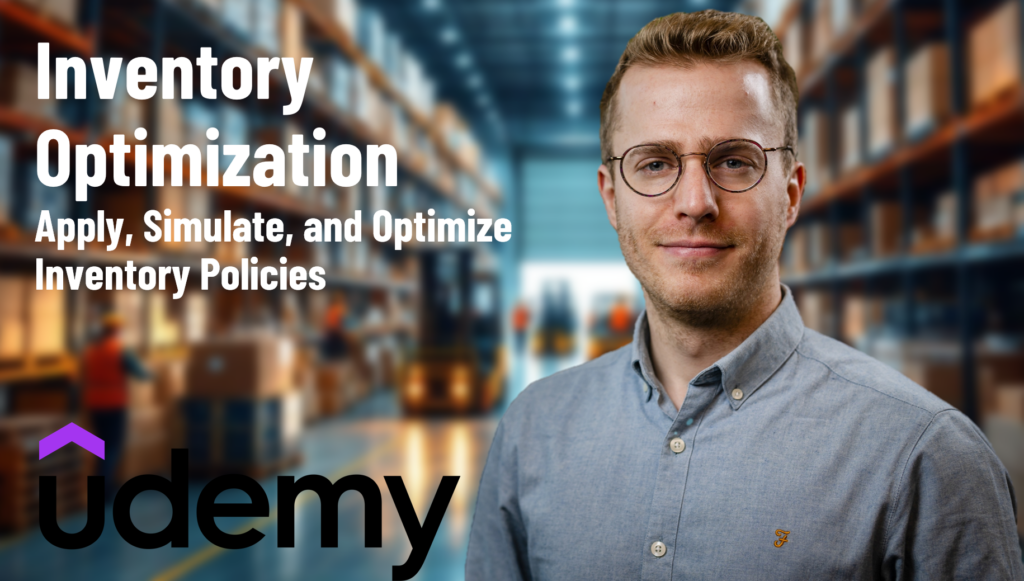
Nicolas Vandeput, author of the three books. He also teaches master students at CentraleSupélec, Albert School and Mines Paris.
Can you adapt the cases to our business?
Yes. We can draw the case studies from your own context and data.
Do our planners need to code?
Your planners build their models and simulations in Excel.
What does our team keep?
The models, simulations and templates of each session. Sessions can be recorded for your internal use.
Can we add people during the course?
You can add participants at any time, at no extra cost.
Do you offer sessions for leadership?
We run two-hour workshops for leadership teams.
Does it depend on our planning software?
The courses teach methods. Your team applies them with any planning software.
Can you also build the forecasting model?
We recommend the Demand Planning course first. Your team learns our method, and our forecasting model is then easier to deploy and use.

The SupChains Way

Our 13 demand and inventory planning practices

16 articles and 7 infographics, free to download

Discover the SupChains Way